
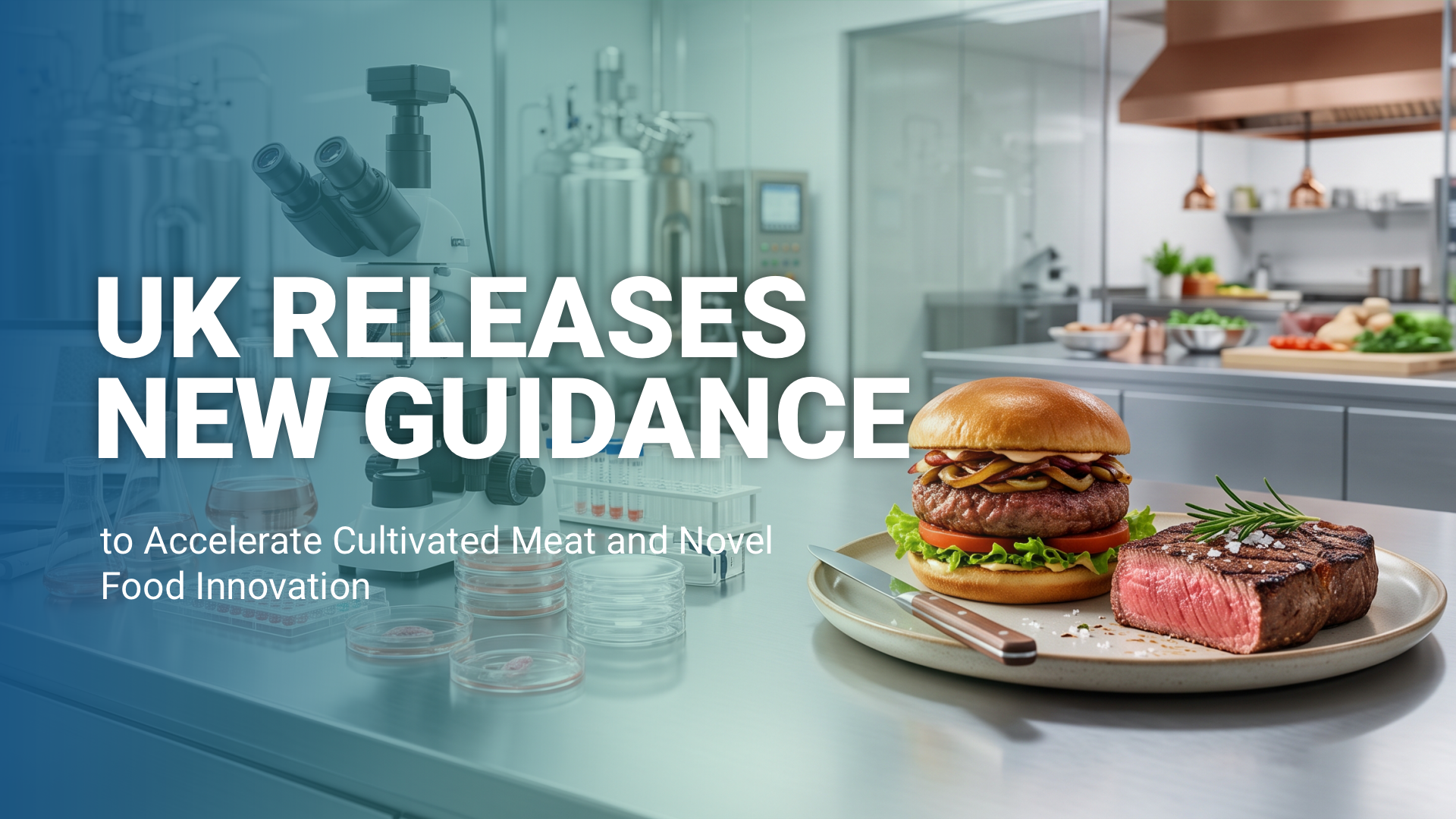
UK Releases New Guidance to Accelerate Cultivated Meat and Novel Food Innovation
The UK is taking another step toward shaping the future of food technology. It has released new regulatory guidance for companies developing cultivated meat, cell-based proteins, and other novel foods.
The government defines these emerging products as “new foods that don’t involve conventional farming, such as rearing livestock or growing plants and grains.” The updated guidance aims to help innovators better understand certification requirements. This supports bringing safe, sustainable food products to the UK market.
New Guidance to Support Food Innovation
In early July, the FSA and FSS published four new guidance documents. These cover key areas for cultivated meat and novel food developers:
Together, these resources provide companies with clearer expectations around food safety, production processes, scientific evidence, regulatory applications, and consumer testing.
Making Market Approval More Accessible
Alongside the guidance, the FSA and FSS are expanding support for businesses through a dedicated Business Support Service, connecting cultivated meat companies with regulatory specialists.
Thomas Vincent, Deputy Director of Innovation at the FSA, highlighted the importance of helping businesses navigate this emerging sector:
“Cell-cultivated products represent a genuinely new frontier for the food industry, and we want businesses to have the clearest possible picture of what is required to bring safe products to market.”
The new publications are part of the UK’s Cell-Cultivated Products Sandbox Programme, funded by the Department for Science and Technology (DSIT). The programme supports collaboration between industry, academia, and regulators while helping companies prepare for market authorisation.
Building a Safer, More Sustainable Food Future
Cultivated meat and other novel food technologies have the potential to reduce the environmental impact of food production while offering consumers new choices without requiring major lifestyle changes.
The latest guidance reflects the knowledge gained through ongoing engagement with innovators and researchers. The goal is to create a more transparent and efficient pathway to market while maintaining the highest standards of consumer safety. For companies working at the forefront of food innovation, these developments represent an important milestone in transforming scientific breakthroughs into commercial opportunities.
Stay Ahead in the Future of Food Innovation
At AmbiLeap, we help innovators, investors, and industry leaders navigate the rapidly evolving landscape of sustainable food technologies.
Whether you are developing next-generation proteins, exploring new partnerships, or looking for strategic insights into the future of food, our team is ready to connect.
Contact AmbiLeap today to explore opportunities in the future of food innovation.