
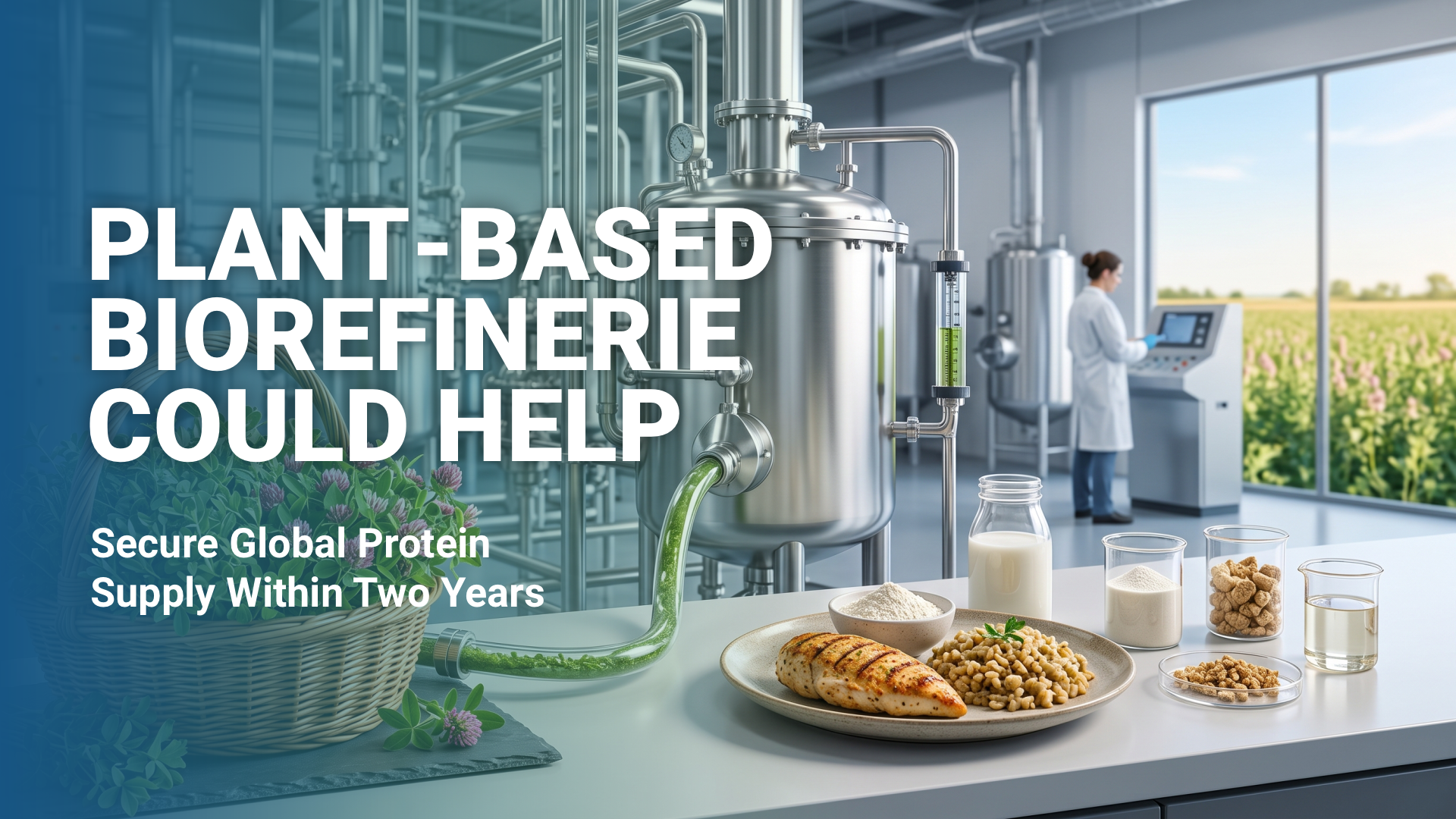
Plant-Based Biorefineries Could Help Secure Global Protein Supply Within Two Years
As the world faces increasing challenges from climate change, resource pressures, and potential disruptions to food systems, new research highlights how innovative food technologies could help build a more resilient future.
A recent peer-reviewed study has found that integrated biorefineries producing plant-based proteins and sugars from leafy biomass could potentially meet global protein requirements in less than two years if rapidly deployed during a major food crisis.
Turning Plants Into High-Value Nutrition
The research, published in Sustainable Production and Consumption and supported by the Alliance to Feed the Earth in Disasters (ALLFED), explored the potential of biorefineries using crops such as alfalfa and red clover.
Through advanced processing, these plants can be converted into:
By extracting nutrients from leafy biomass that is traditionally used for animal feed, these systems could unlock new sources of human food production.
A New Approach to Food System Resilience
The study suggests that grasslands and forage crops represent a significant untapped opportunity for food production. While humans cannot digest many of these plants directly, biorefinery technologies can transform them into nutritious food ingredients.
Researchers estimated that, during a global food emergency, integrated biorefineries could help provide essential nutrition at a cost of approximately USD $1–2 per person per day. Achieving this would require a significant expansion of crops such as alfalfa, but the findings demonstrate the scale of opportunity available through alternative food production systems.
Preparing for Future Challenges
Growing populations, changing diets, extreme weather events, future pandemics, and other global disruptions are increasing the need for resilient food solutions.
Beyond plant-based biorefineries, researchers are also exploring other emerging approaches, including precision fermentation, biosynthesis, and food production systems that can operate independently from traditional agriculture. These technologies could play a critical role in creating a more adaptable global food system — one capable of responding to unexpected challenges while supporting long-term sustainability.
Building the Future of Food with AmbiLeap
At AmbiLeap, we track the innovations transforming how the world produces nutrition — from alternative proteins and biomanufacturing to sustainable food systems and climate-resilient technologies.
If you are developing, investing in, or exploring opportunities in next-generation food solutions, we would like to connect.
Contact AmbiLeap today to explore the future of sustainable food innovation.