
Fermentation – Derived Protein Targets One of Food Manufacturing’s Biggest Challenges: Cost and Texture
The next phase of alternative protein may be less about creating entirely new food categories and more about improving the ingredients already used by food manufacturers.
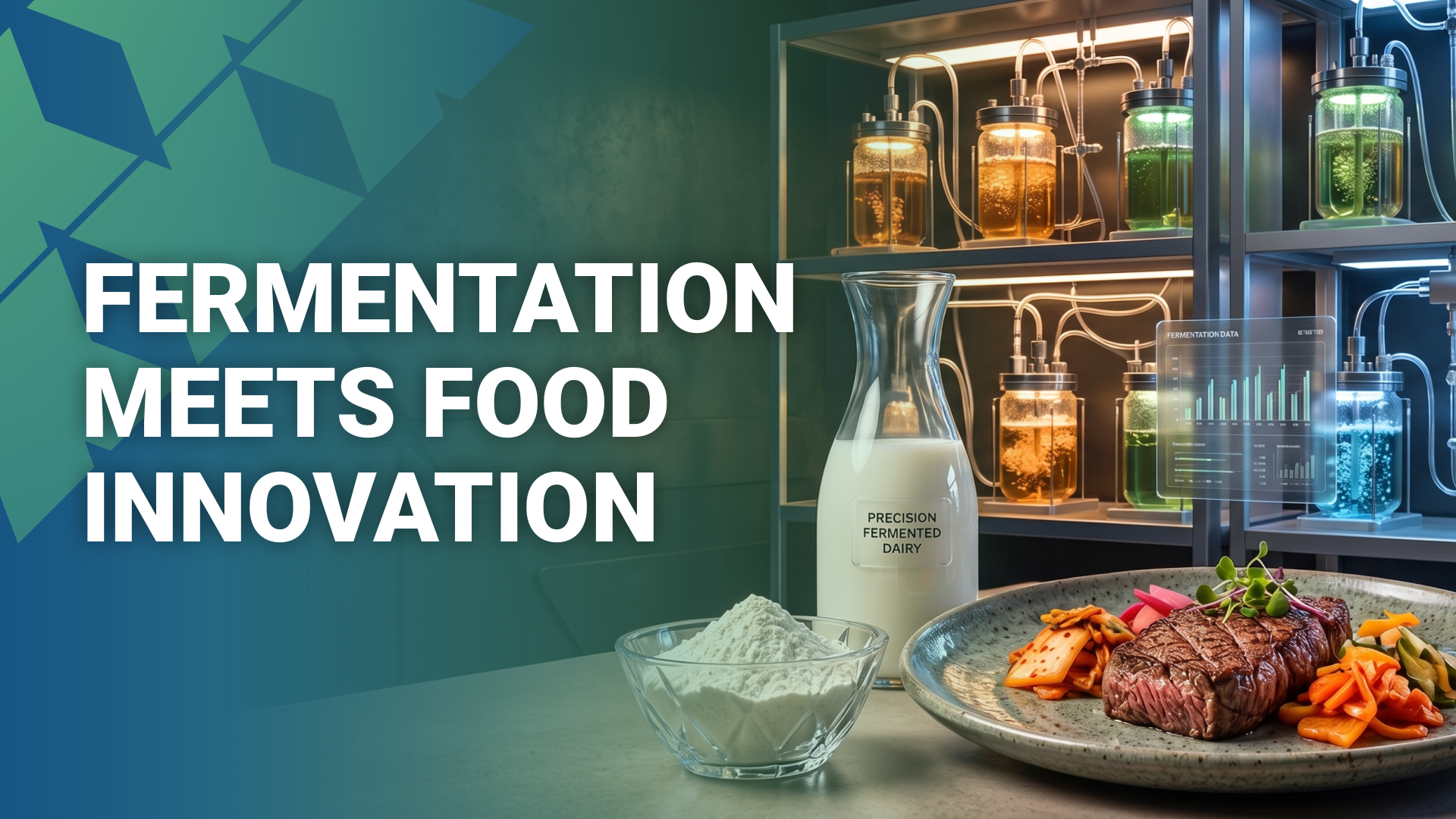
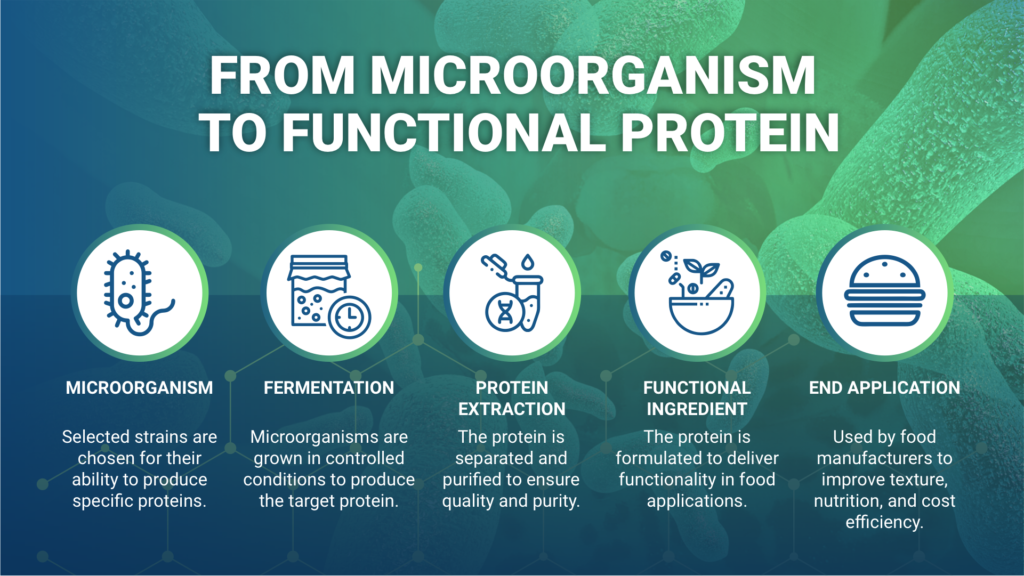
A new generation of fermentation companies is developing proteins designed to improve texture, functionality and formulation economics — potentially addressing some of the biggest barriers facing plant-based and other alternative food products. Precision fermentation uses microorganisms as biological production systems to manufacture specific proteins and other functional ingredients. The technology is increasingly being explored for dairy and egg proteins, fats, enzymes, pigments and other ingredients used by food manufacturers.
From “alternative product” to “better ingredient”
For food manufacturers, the value proposition is straightforward: an ingredient does not necessarily need to replace an entire product. It can improve one difficult part of the formulation.
Protein functionality is a particularly important target.
Plant proteins can create challenges around texture, flavor, solubility and processing. Fermentation-derived proteins could potentially help manufacturers develop products with improved sensory characteristics without completely redesigning existing production systems.
Cost remains the real test
Technology alone, however, will not determine whether fermentation becomes commercially successful.
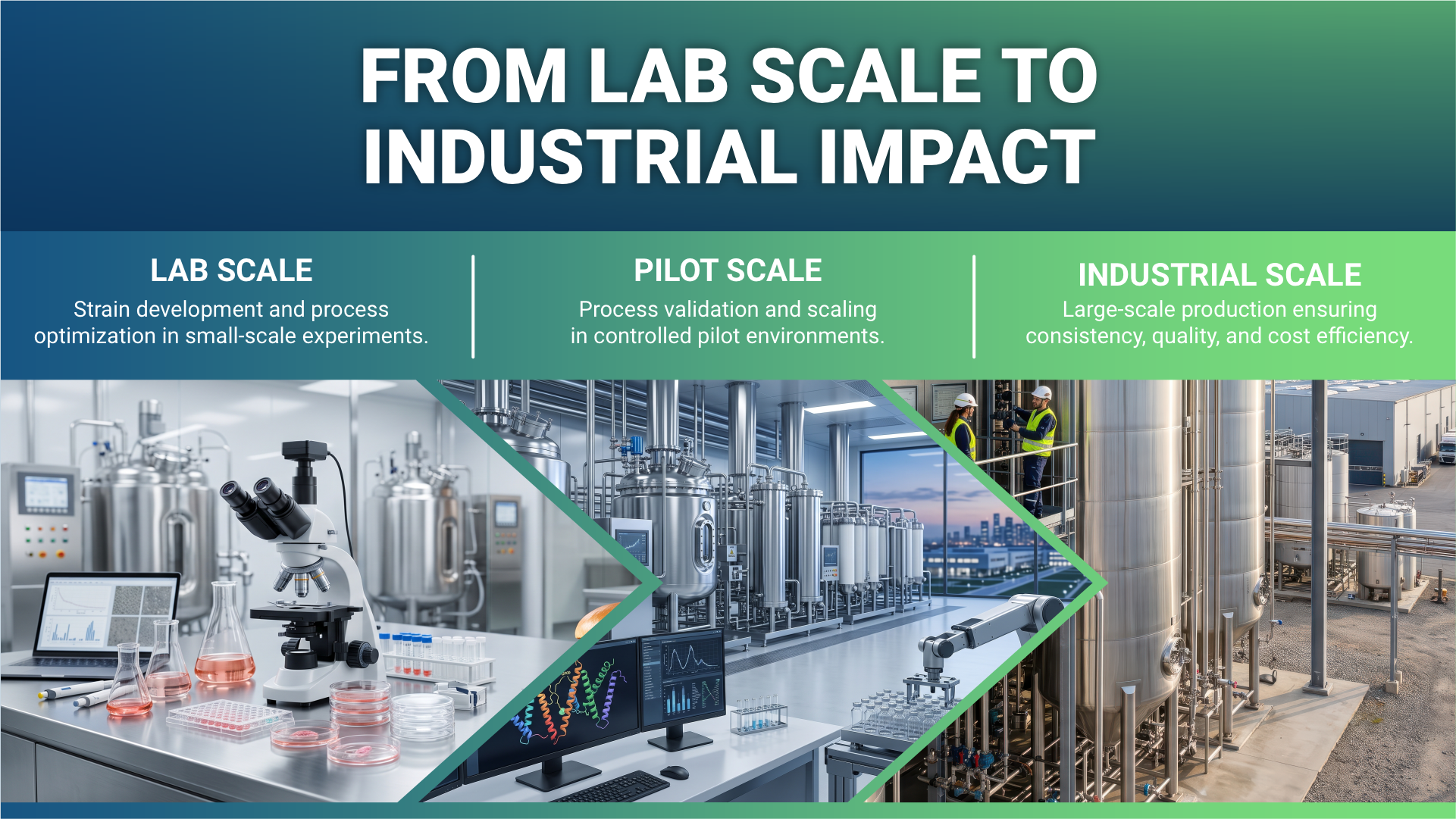
The economics of producing food-grade proteins at scale remain one of the industry’s biggest challenges. Fermentation companies must deal with the cost of feedstocks, energy, fermentation infrastructure and downstream processing.
This is why the industry’s attention is increasingly shifting toward scale-up economics.
A protein that performs exceptionally well in a laboratory but costs too much to manufacture has limited value for a mass-market food producer.
B2B could become the winning model
The development of fermentation-derived ingredients also reflects a broader shift in alternative protein.
Instead of launching another consumer brand, companies are increasingly looking to supply ingredients to established food manufacturers.
That strategy could give technology companies access to existing distribution networks and manufacturing capabilities while allowing large food companies to incorporate new ingredients into products they already know how to produce.
What happens next?
The next competitive battle in fermentation is unlikely to be won by the company with the most impressive laboratory demonstration.
It will be won by companies that can answer four practical questions:
Does the ingredient perform? Will it hold up in consistent production? Can manufacturers actually afford it? And can it reach meaningful commercial scale?
For food manufacturers, that could make fermentation-derived proteins increasingly attractive not as a futuristic alternative to conventional food, but as a new generation of functional ingredients.
And that may be one of the most important shifts happening in alternative food right now: the industry is moving from asking “Can we make food differently?” to asking “Can we make food better — and at a cost the market will accept?”
Beyond the News: Turning Early Signals Into Business Intelligence
The development of fermentation-derived proteins is just one example of how quickly the functional food and beverage landscape is changing.
We are a market intelligence and innovation research company focused on the future of functional food, beverages, ingredients, and wellness technologies.
Our team brings together expertise in R&D, nutrition science, market intelligence, data analysis, and AI-driven research. While our company is new, our specialists bring years of experience across consulting, highly regulated industries, consumer electronics, B2B services, and innovation-focused markets.
We help companies understand where the market is moving before trends become obvious.
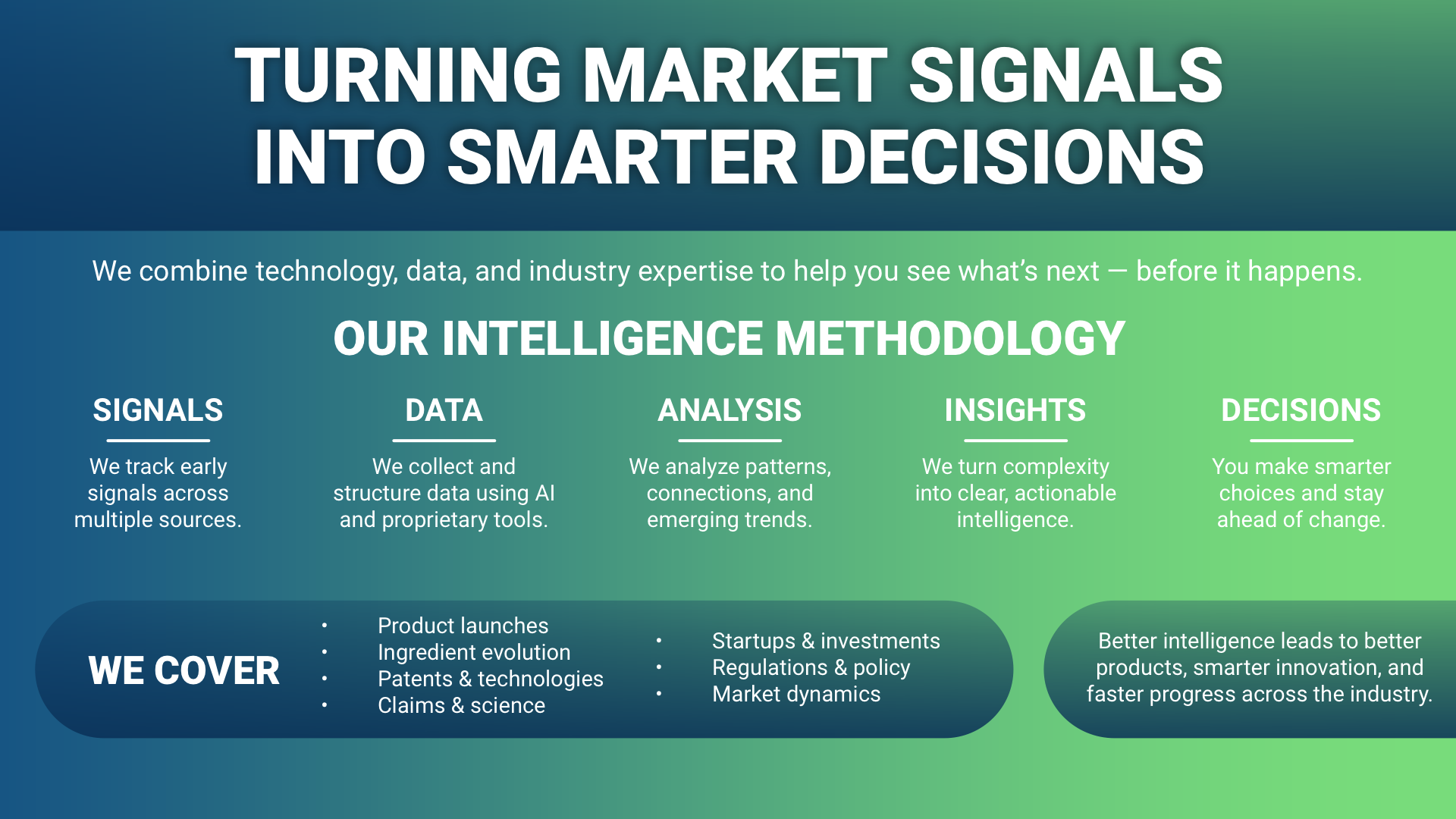
By combining proprietary research methods, data analysis, AI technologies, expert networks, and human validation, we transform early market signals into practical business intelligence.
Our research tracks product launches, ingredient evolution, patents, claims, technologies, startups, regulations, and emerging market dynamics — helping teams reduce uncertainty, identify opportunities earlier, and make smarter strategic decisions.
What makes our approach different is the combination of technology and industry expertise. We do not simply collect data. We connect signals across markets, technologies, ingredients, and innovation activity to build a clearer picture of what is happening now — and what is likely to happen next.
Better intelligence leads to better products, smarter innovation, and faster progress.
Want to know what is coming next?
Talk to our team about market intelligence, innovation research, emerging ingredients, technologies, and future opportunities in food, beverage, and wellness.