
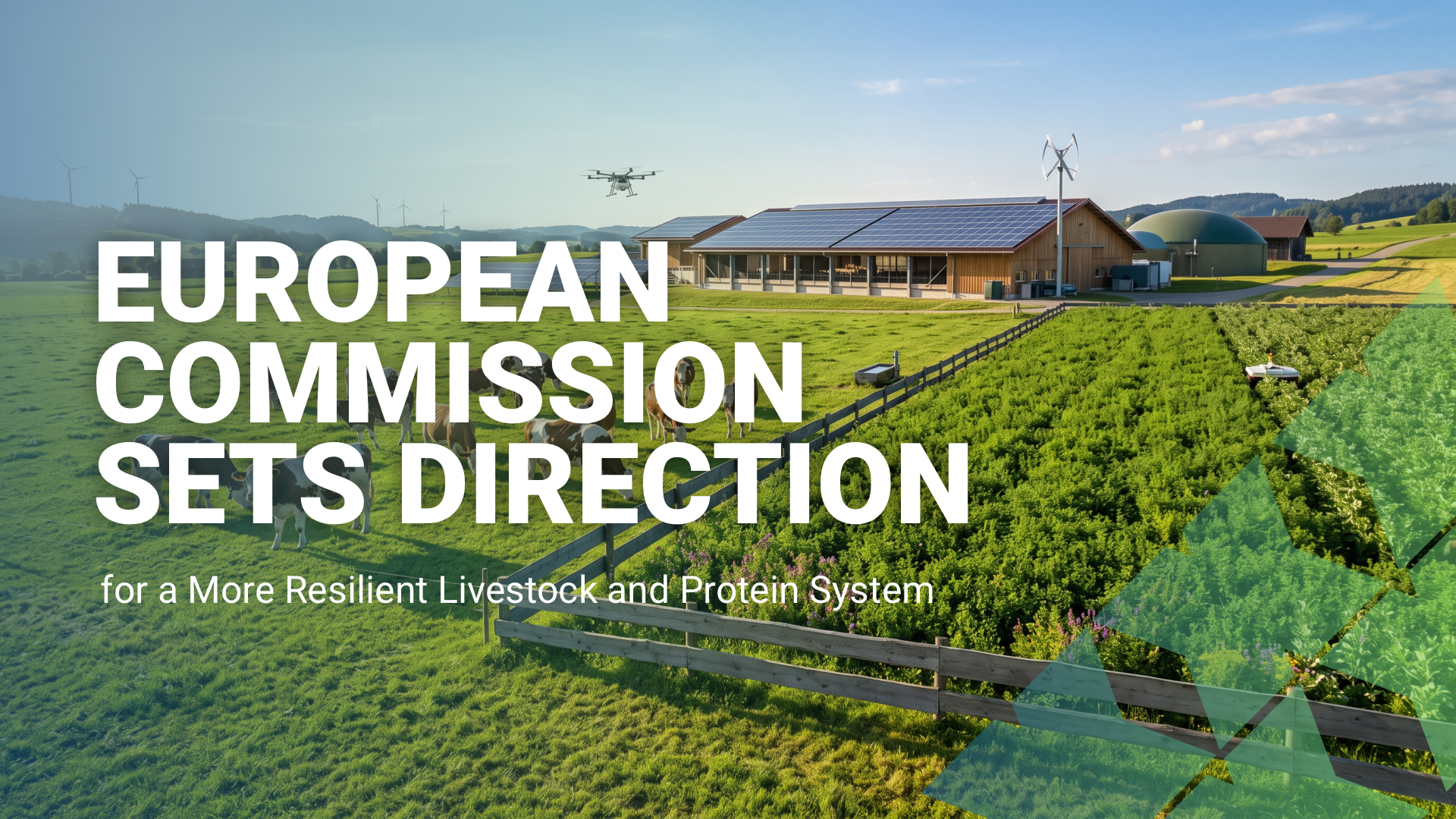
European Commission Sets Direction for a More Resilient Livestock and Protein System
The European Commission has unveiled its first-ever Livestock Strategy. It sets out a long-term vision to strengthen Europe’s livestock sector while building a more resilient, sustainable, and self-sufficient protein system.
The strategy recognises the important role of livestock farming in Europe’s food security, rural communities, and agricultural economy. It also addresses growing challenges, including climate pressures, rising costs, animal disease risks, market uncertainty, and import dependence.
Five Priorities for the Future of European Livestock
The new strategy focuses on five key areas:
01
Building a Resilient Sector Prepared for Future Crises
The Commission aims to strengthen crisis preparedness through improved risk management, disease prevention, early detection systems, and support for farmers recovering from disruptions.
Reducing dependency on imported inputs and increasing climate resilience will remain central priorities.
02
Improving Competitiveness Through Innovation
The strategy highlights the importance of innovation, investment, and new market opportunities to support a competitive European livestock sector.
The Commission will explore ways to improve access to finance and encourage circular bioeconomy approaches. It will also support biomass valorisation and help farmers transition toward more sustainable production systems.
03
Supporting Sustainable Production
A tailored approach will be used to address sustainability challenges across Europe’s diverse farming regions.
Key actions include improving animal welfare standards, developing harmonised livestock emissions measurement methods, advancing climate mitigation practices, and strengthening resource efficiency across food systems.
04
Supporting Farms and Rural Communities
The Commission aims to preserve the connection between livestock farming and rural landscapes by supporting sustainable production in vulnerable regions.
Plans include developing stronger local supply chains, encouraging low-capacity and mobile slaughterhouse solutions, and reducing unnecessary animal transport.
05
Promoting European Quality and Excellence
Europe’s high standards in food safety, sustainability, and quality will be further promoted through stronger origin labelling, quality recognition schemes, geographical indications, and support for organic production.
A New Focus on Protein Independence
Alongside the Livestock Strategy, the European Commission has introduced a Protein Action Plan designed to strengthen Europe’s protein supply chain and reduce strategic dependencies.
Currently, only around 25% of protein from oilseeds and protein crops is sourced within the EU. The new plan aims to increase this figure to 35% by 2035 by supporting European-grown protein crops, encouraging innovation, and improving the competitiveness of domestic protein sources.
The initiative also recognises the growing importance of diverse protein systems, linking agriculture, food production, energy, and industrial biotechnology.
The Future of Protein Requires Multiple Solutions
Europe’s approach highlights a broader shift toward building a more secure and adaptable food system. Traditional agriculture, improved livestock production, plant-based proteins, and emerging technologies will all play a role in meeting future nutritional needs.
Innovation across alternative proteins, circular bioeconomy solutions, and sustainable production technologies will be critical in reducing resource pressures while strengthening global food resilience.
AmbiLeap: Tracking the Future of Food Innovation
At AmbiLeap, we follow the developments shaping the next generation of food systems — from sustainable agriculture and alternative proteins to biotechnology, biomanufacturing, and resilient food solutions.
Whether you are an innovator, investor, or organisation exploring opportunities in the future of food, we are here to help connect insights with action.
Contact AmbiLeap today to explore opportunities in sustainable food innovation and the evolving global protein landscape.