
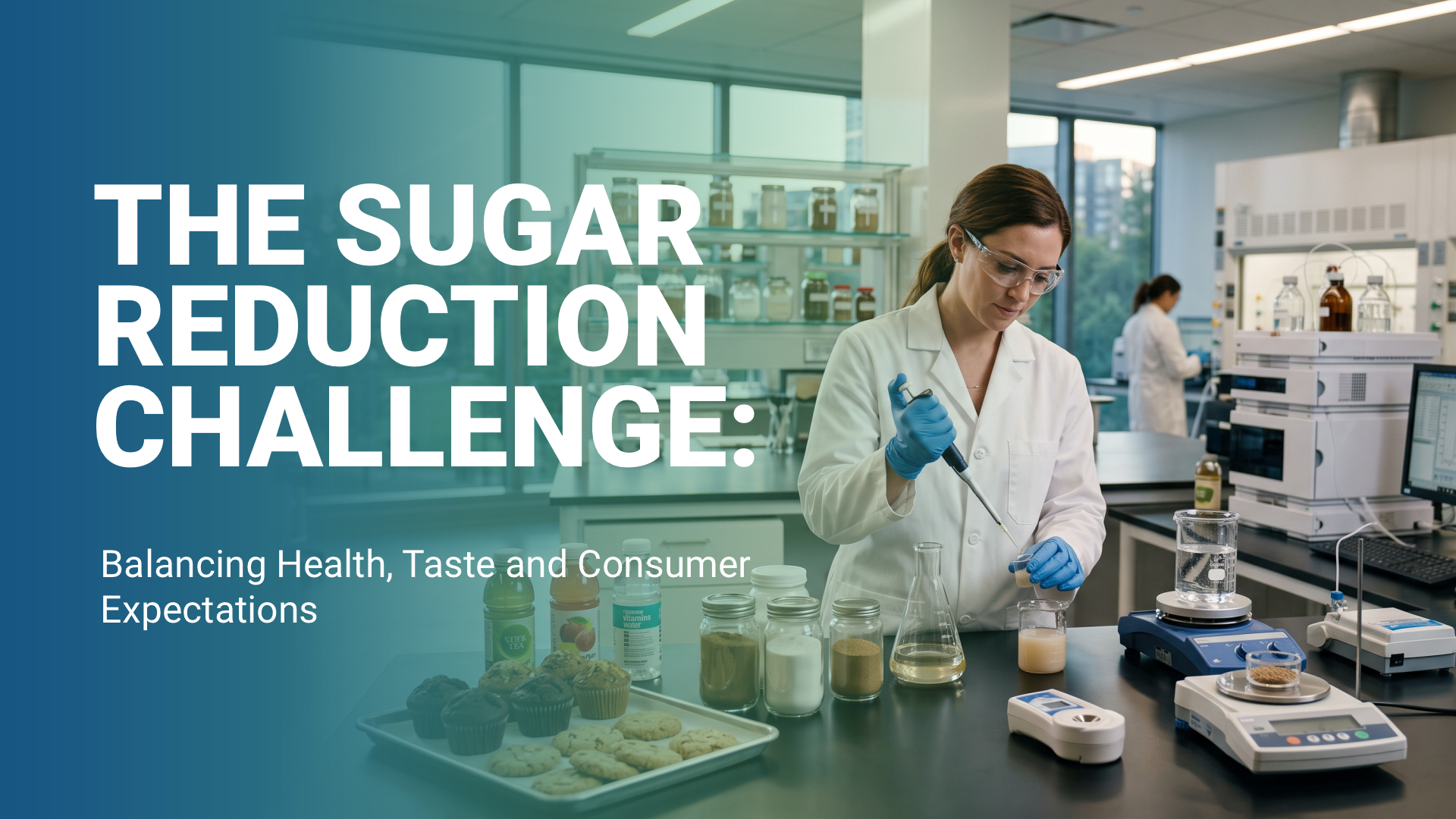
Balancing Health, Taste and Consumer Expectations
Sugar reduction has evolved from a niche nutrition trend into a major product development challenge for the food and beverage industry.
Consumers are increasingly looking for products with less sugar, but they are not necessarily willing to compromise on taste, texture or enjoyment. At the same time, expectations around clean labels, recognizable ingredients and nutritional value continue to grow.
For manufacturers, this creates a complex challenge: how can products deliver a better nutritional profile while maintaining the sensory experience consumers expect?
The answer is becoming increasingly important as brands across beverages, snacks, dairy, bakery and other categories rethink their formulations.
Why Sugar Reduction Is Becoming a Bigger Industry Trend
The demand for lower-sugar products is part of a broader shift in consumer expectations.
Consumers are paying more attention to what goes into their food and beverages, while also looking for products that fit healthier lifestyles. Sugar is therefore no longer viewed only as an ingredient that provides sweetness. For many consumers, it has become an important part of how they evaluate the nutritional profile of a product.
At the same time, consumers are not choosing products based on nutrition alone.
They still expect food to be enjoyable, convenient and affordable. This creates an increasingly difficult balancing act for manufacturers:
less sugar + great taste + appealing ingredients + competitive price.
This combination is making sugar reduction less of a simple reformulation exercise and more of a strategic product innovation challenge.
Consumers Want Less Sugar — But Not Less Taste
One of the biggest challenges is that reducing sugar can change much more than sweetness.
Sugar contributes to the overall sensory experience of many products. Depending on the application, it can influence mouthfeel, texture, body, aroma, browning and product structure.
Simply removing it can therefore result in a product that tastes noticeably different from the original.
Consumers may be interested in a product because it contains less sugar, but that alone is unlikely to create long-term loyalty.
A lower-sugar product still needs to taste good.
This is particularly important in categories traditionally associated with indulgence, including confectionery, desserts, bakery products, snacks and beverages.
For manufacturers, the goal is not simply to create a product that contains less sugar. The goal is to create a product that consumers genuinely want to buy again.
The Sugar Substitute Challenge
Sugar substitutes and alternative sweetening systems have become an important part of the industry’s response.
However, there is no universal solution.
Different sweetening ingredients can have different sweetness intensities, onset and duration profiles, aftertastes and formulation characteristics. Some may work particularly well in beverages, while others may be better suited to bakery, dairy or other applications.
This means that selecting a sugar substitute is rarely just a question of finding an ingredient that provides sweetness.
Manufacturers need to consider the entire formulation.
Key factors can include:
As a result, successful sugar reduction often requires a combination of ingredients, formulation expertise and product-specific testing.
Clean Label Makes the Equation More Complex
Sugar reduction is also closely connected to the clean label movement.
Consumers increasingly expect products to deliver multiple benefits at the same time: lower sugar, recognizable ingredients, a simple label and great taste.
This creates another challenge for manufacturers.
A technically effective ingredient may not necessarily align with consumer expectations around naturalness, familiarity or transparency. Conversely, an ingredient that performs well from a consumer perception perspective may create technical or sensory challenges.
The industry is therefore moving away from the idea that there is one “perfect” sugar replacement. Instead, the focus is shifting toward finding the right combination of ingredients and technologies for a specific product, consumer and market opportunity.
The Reformulation Challenge
For established brands, sugar reduction can also mean reformulating products that consumers already know and love.
This is particularly difficult because even relatively small changes can affect the sensory profile of a familiar product.
Manufacturers may need to balance several objectives simultaneously:
Improve the nutritional profile without changing the product consumers recognize.
This can require extensive formulation work, testing and iteration.
It also raises an important strategic question: which reformulation opportunities are worth pursuing?
Not every sugar reduction opportunity will have the same commercial potential. Some categories may offer stronger consumer demand, clearer market positioning or better opportunities for differentiation than others.
Understanding where the market is moving can therefore be just as important as solving the formulation challenge itself.
From Ingredient Selection to Innovation Strategy
This is where sugar reduction becomes part of a much broader food innovation challenge.
Manufacturers today are navigating multiple trends simultaneously: sugar reduction, clean label, protein enrichment, functional nutrition, plant-based ingredients, personalization and growing interest in healthier everyday foods.
These trends often overlap.
A consumer looking for a lower-sugar product may also expect it to contain recognizable ingredients, provide functional benefits and fit into a convenient lifestyle.
For food companies, this means that product development decisions increasingly need to be informed by more than ingredient functionality alone.
Understanding consumer demand, emerging ingredients, scientific research, competitive activity and regulatory developments can help companies identify opportunities earlier and make more informed innovation decisions.
What Does the Future of Sugar Reduction Look Like?
The next phase of sugar reduction is unlikely to be about simply finding a replacement for sucrose.
Instead, the industry is likely to focus on more sophisticated approaches that balance several objectives at once:
This creates significant opportunities for ingredient suppliers, food manufacturers and innovators.
Companies that can successfully balance health, taste and consumer expectations will be better positioned to develop products that are not only nutritionally improved, but also commercially successful.
Ultimately, the future of sugar reduction is not about making food taste “healthy”.
It is about making better-for-you products that consumers genuinely enjoy.
How AmbiLeap Can Support Sugar Reduction Innovation
Finding the right opportunity in sugar reduction requires more than identifying a new sweetener. Companies need to understand where consumer demand is heading, which ingredients and technologies are gaining traction, what the scientific evidence says, and how the competitive landscape is evolving.
AmbiLeap brings these insights together in one platform, helping food and beverage companies connect market trends, scientific research, regulatory information, patents and product data.
Whether you are exploring sugar reduction, evaluating alternative sweetening systems or looking for the next product innovation opportunity, AmbiLeap can help your team move from market insight to informed innovation decisions.
Discover how AmbiLeap can help you identify and evaluate the next opportunity in food innovation.